July 30, 2026
How the Best Digital Marketing and Advertising Agency in Chandigarh Use Psychology, Strategy & Science to Build Ads
Most brands can tell you what an ad campaign costs. Far fewer can tell you what it actually did. That gap between spend and proof is where most marketing budgets disappear, and it's exactly the gap that the best creative design company in Chandigarh has spent a long time learning to close.
An ad that looks brilliant on a mood board means very little if nobody remembers the brand behind it. So how do agencies actually know whether a campaign has worked? The honest answer is that there isn't one single method. There are several frameworks, developed across decades, each looking at effectiveness from a slightly different angle, and each with its own strengths and blind spots.
Why Frameworks Even Matter
Creativity without a framework is just opinion dressed up nicely. A campaign might win applause in the boardroom and still fail to move a single sale. That's why serious agencies build strategic thinking into the process from day one, not as an afterthought once the ad has already gone live. Frameworks force honesty. They ask whether the idea did its job, not just whether it looked good doing it.
Below is a walk-through of the models that have shaped how the industry judges advertising, arranged in roughly the order they emerged.
AIDA Model (1898)
Proposed by E. St. Elmo Lewis, AIDA breaks consumer response into four stages: Attention, Interest, Desire and Action. It tracks how a stranger becomes a buyer, one step at a time.
Its simplicity is its biggest strength. It's easy to explain to a client and works well when structuring a single piece of creative, from headline to call to action. The trouble is that real consumers rarely follow such a tidy, straight-line journey, and the model says nothing about loyalty or repeat purchase, which makes it a poor fit for fragmented digital paths.
Maslow's Hierarchy of Needs (1943)
Abraham Maslow's model wasn't built for advertising, but agencies borrow it constantly. It arranges human needs in a pyramid, from basic survival at the bottom to self-fulfilment at the top, and asks which level a piece of messaging is actually speaking to.
It's a useful check for whether a message matches genuine human motivation, particularly for positioning work rather than a single ad. That said, it was never designed as a measurement tool, so it offers no hard numbers, and its fixed order of needs doesn't always hold up across different cultures.
DAGMAR Model (1961)
Developed by Russell Colley, DAGMAR stands for Defining Advertising Goals for Measured Advertising Results. It guides consumers through a four-stage hierarchy of effects: Awareness, Comprehension, Conviction, and Action (ACCA).
It forces clear, written objectives from the outset, which makes reporting and accountability far easier down the line. On the flip side, it can turn planning into a box-ticking exercise, and its rigid goal-setting doesn't always suit fast-moving digital work.
The Product Life Cycle Model (1965)
Associated with Theodore Levitt, this model examines an ad by asking whether it suits the brand's current stage: introduction, growth, maturity or decline. A launch campaign, after all, has different jobs to do than one defending market share.
It keeps creative strategy grounded in business reality and helps explain why the same tactic won't work forever. However, product stages are often unclear or overlapping in practice, and the model offers little guidance on the creative itself.
The Black Box Model (1967)
Rooted in behaviourist stimulus-response thinking and popularised through Philip Kotler's marketing writing, this model treats the consumer's mind as an unknown "black box." Marketers provide external inputs (product, price, place, promotion), which enter the "black box" that is the customer’s mind. This box contains the buyer's internal characteristics and decision process, which ultimately generate the output: a purchase decision.
It keeps the focus on measurable inputs and outputs, and it's flexible enough to sit alongside almost any other framework. Its weakness is that it explains nothing about why a decision was made, only that it happened, which can nudge teams towards trial and error rather than genuine strategy.
Ehrenberg's ATR Framework (1974)
Andrew Ehrenberg's model looks at Awareness, Trial and Reinforcement, arguing that advertising mainly nudges existing buying habits rather than converting people overnight. It's a quieter, more realistic view of how advertising actually behaves.
It's grounded in real purchasing data and explains why repeat exposure matters more than one clever ad, making it useful for established brands defending their position. It is, admittedly, less exciting for creative teams chasing a big persuasive idea, and it underplays the emotional side of brand-building.
VIPS Model (1974)
A copy-testing approach used widely in agency circles, VIPS examines Visibility, Identity, Promise and Single-mindedness within a single piece of creative, essentially asking whether an ad can be spotted, recognised and understood at a glance.
It's a quick, practical checklist for reviewing finished creative and works well across print, digital and outdoor formats. Its limitations are that it says little about long-term brand impact and can feel fairly subjective without supporting research behind it.
DRIP Model (1999)
Associated with Chris Fill, DRIP checks whether communication is Differentiating, Reinforcing, Informing or Persuading, and questions whether a single ad is trying to do too many of these jobs at once.
It sharpens focus by forcing a single, clear communication purpose, which makes it a useful diagnostic during briefing. Even so, it doesn't measure outcomes, only intent, and it needs disciplined briefing to actually be useful rather than just an academic exercise.
Where These Frameworks Fail
Here's the honest bit. Most of these frameworks were built with one medium in mind, usually print or broadcast, back when a campaign meant one advert running everywhere. Digital changes that, and so does the sheer number of formats a single brief now has to live across.
A billboard doesn't behave like a search ad. A television spot doesn't behave like an Instagram reel. Trying to force every format through the same lens tends to flatten out what actually made each one succeed or fail. Something else is needed alongside them, particularly for agencies handling both traditional and digital work under one roof.
Introducing Mantrin's CHEER Model
Rather than lean on a single borrowed framework, Mantrin approaches campaigns against something closer to home: whether the work honoured the brief and whether it genuinely landed with the people it was meant for. This thinking sits inside what the team internally calls CHEER.
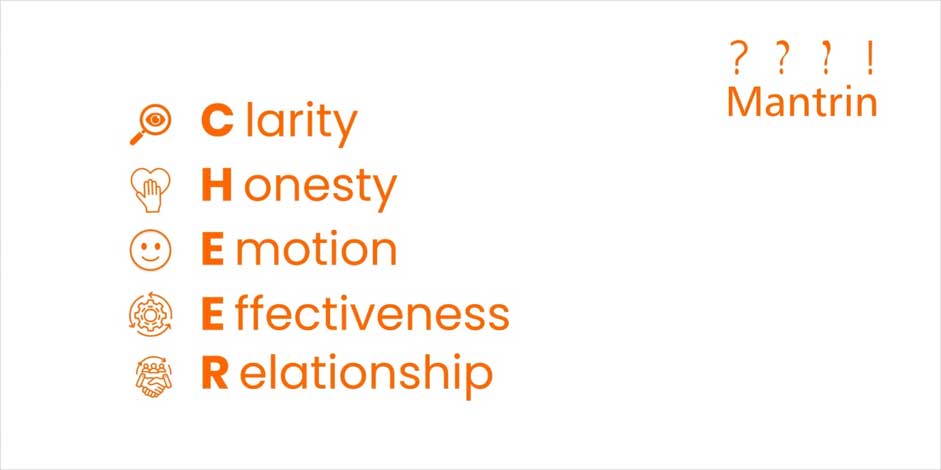
- • Clarity: Does the final output solve the actual problem the client came in with, not a more interesting problem the team invented along the way?
- • Honesty: Did we tell the client what they needed to hear, not just what they wanted to hear?
- • Emotion: Did the ad resonate with the audience it was meant for?
- • Effectiveness Across Media: Is the idea flexible enough for every medium?
- • Relationship: Did the project leave the client-agency relationship stronger than before?
CHEER isn't meant to replace AIDA or DAGMAR. It sits alongside them, asking whether all that carefully measured attention, desire and action actually left the client and their audience a little happier than before the campaign began.
Not every framework fits every ad, and that's fine. What matters is picking the right lens for the right medium, and being willing to ask the harder question underneath all of it: did the work actually help? For any brand trying to build something that lasts, working with a digital marketing and advertising agency in Chandigarh that treats strategic frameworks as seriously as creativity is worth the search. It's a conversation worth having before the next brief is written, not after the campaign has already gone live.